
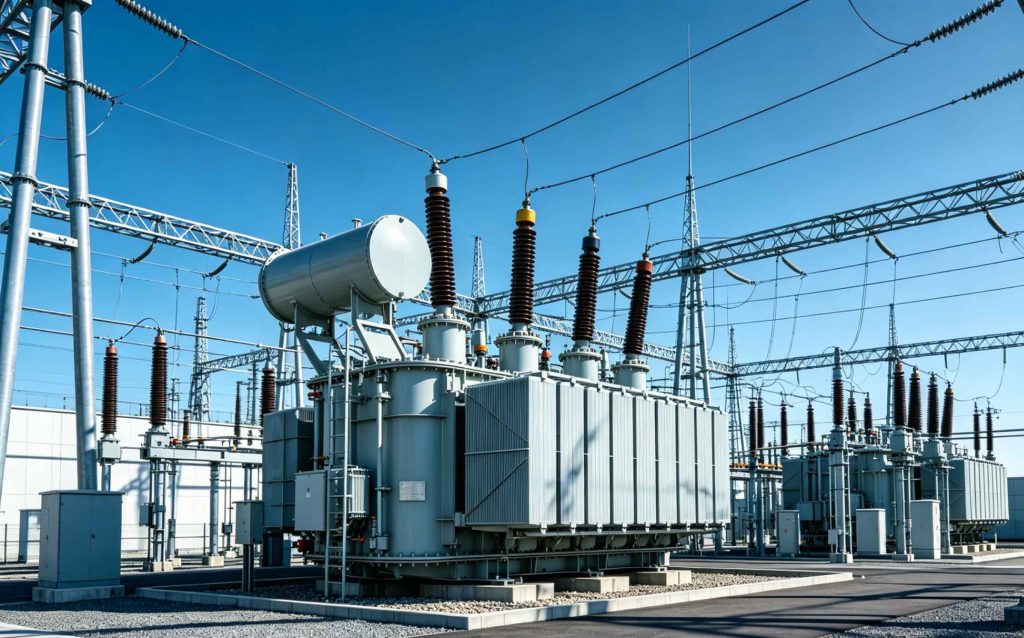
Yes. A power transformer can operate in reverse as long as it is designed for the same voltage ratio, frequency, insulation level, and power rating. This is one of the fundamental characteristics of transformers based on the principle of electromagnetic induction.
For example, a transformer rated 132kV/33kV is typically used as a step-down transformer in a transmission substation. However, the same transformer can also be connected in reverse to increase 33kV generated by a solar or wind power plant to 132kV for transmission into the utility grid.
This capability is widely used in renewable energy projects, industrial substations, and modern smart grids.
To understand why reverse operation is possible, we first need to look at how a transformer is built. At its core, a standard AC transformer relies on Faraday’s Law of Electromagnetic Induction transfers electrical energy between two circuits through magnetic induction.
A basic transformer consists of three main components:
Primary Winding: The coil connected to the input power source.
Secondary Winding: The coil connected to the output load.
Magnetic Core: The iron or ferrite structure that channels the magnetic flux between the coils.
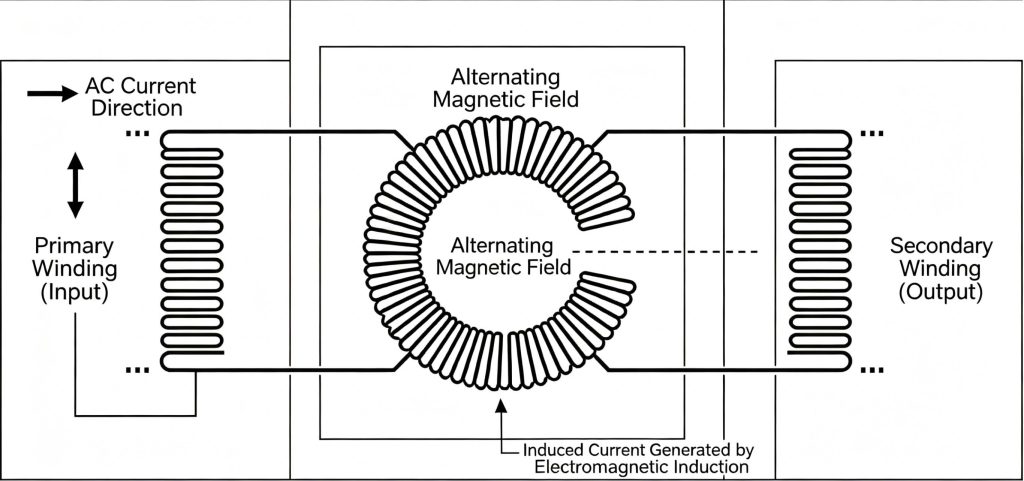
When Alternating Current (AC) flows through the primary winding, it creates a constantly changing magnetic field in the core. This changing magnetic flux passes through the secondary winding, inducing a voltage across it.
The voltage ratio depends on the turns ratio:
Voltage Ratio = Number of Secondary Turns / Number of Primary Turns
Therefore:
More secondary turns = higher voltage (Step-Up)
Fewer secondary turns = lower voltage (Step-Down)
Because this process is purely based on electromagnetism and mutual induction, the physics itself does not care which side is the “input” and which is the “output.” The coils are inherently bidirectional.
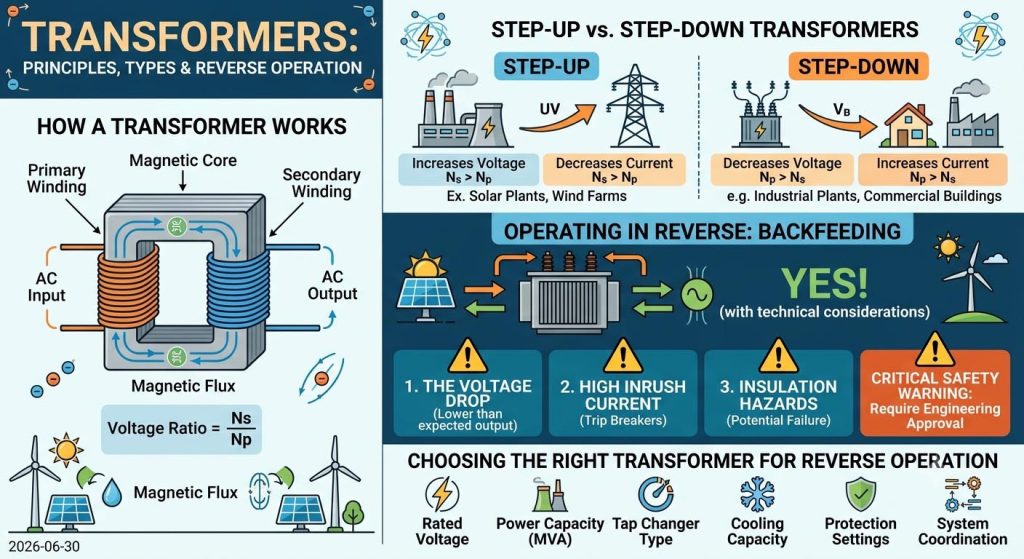
A step-up transformer increases voltage while decreasing current, making long-distance power transmission more efficient by reducing transmission losses.
A step-down transformer reduces high transmission voltage to safer and more practical distribution voltages for industrial, commercial, and residential users.
The factor that determines whether a transformer steps voltage up or down is the turns ratio (Ns / Np), which represents the number of wire loops in the secondary winding (Ns) compared to the primary winding (Np).
Feature | Step-Up Transformer | Step-Down Transformer |
Turns Ratio | Secondary turns > Primary turns (Ns > Np) | Primary turns > Secondary turns (Np > Ns) |
Voltage Effect | Increases output voltage (Vs > Vp) | Decreases output voltage (Vp > Vs) |
Current Effect | Decreases output current | Increases output current |
Common Use Case | Power plants (boosting voltage for transmission) | Substation to homes (dropping voltage to safe levels) |
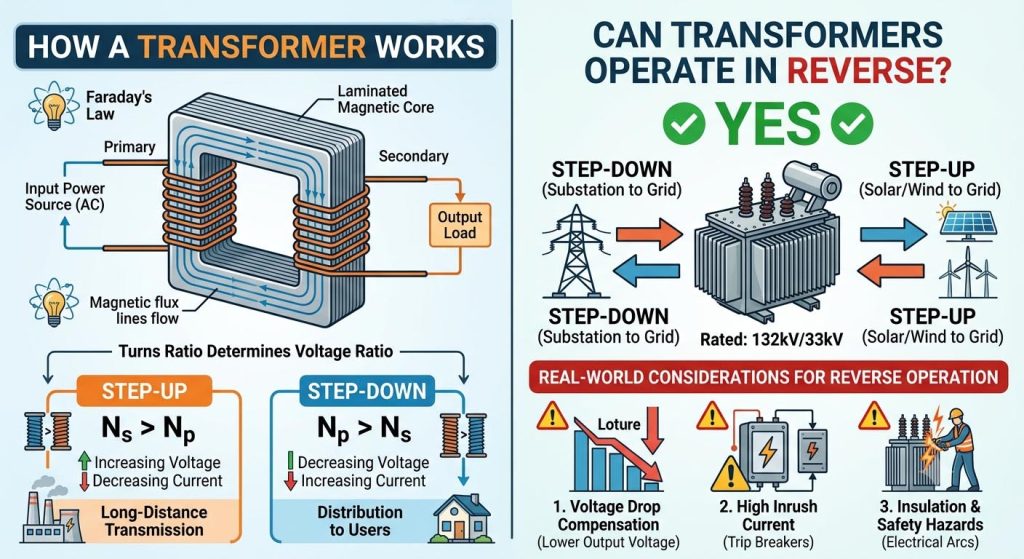
If you take a standard step-down transformer (e.g., 240V down to 12V) and connect a 12V AC source to the secondary winding, the physics of mutual induction will still work. The transformer will reverse its role and output approximately 240V from the primary winding.
While it works on paper, “backfeeding” a transformer in the real world introduces several engineered flaws:
1.The Voltage Drop (Compensation Factor)
Standard transformers are not perfectly efficient; they suffer from energy losses (copper losses and iron losses). To ensure the user gets the exact rated output voltage under full load, manufacturers intentionally add a few extra turns (usually 3% to 5%) to the secondary winding.
When operated normally, this compensation ensures you get the full rated voltage.
When operated in reverse, this extra turns ratio works against you. The output voltage will be lower than expected. For example, a reversed step-down transformer meant to output 240V might only output around 220V–230V.
2.High Inrush Current
Transformers are designed with the magnetic properties of the primary winding in mind. The secondary winding often has lower impedance. When you energize the transformer from the secondary side, it can draw a massive spike of initial current (inrush current). This spike can easily trip circuit breakers or damage the source supply.
3.Insulation and Safety Hazards
This is the most critical danger. In a step-down transformer, the primary side is insulated to handle high voltages, while the secondary side is insulated for lower voltages. If you reverse the operation, you are introducing high voltage into sections of the device—and the overall system—that may not have the adequate insulation or physical clearance to handle it safely, leading to electrical arcs or catastrophic insulation failure.
⚠️ Critical Safety Warning: Backfeeding transformers without proper engineering approval, specific “reverse-feed” rated equipment, and adequate overcurrent protection can lead to severe electrical fires, equipment destruction, and lethal shocks.
Technically, most standard power transformers can operate in reverse, but successful reverse operation depends on several engineering considerations.
1.Voltage Ratio
The input voltage must match the transformer’s designed ratio.
For example:
Rated: 132kV / 33kV
Reverse operation: 33kV input → 132kV output
Incorrect voltage may damage insulation or connected equipment.
2.Tap Changer Position
On-load tap changers (OLTC) and off-circuit tap changers (OCTC) must be correctly adjusted to maintain proper output voltage.
3.Cooling Capacity
Reverse power flow may change load distribution and thermal conditions. The cooling system (ONAN, ONAF, OFAF, etc.) should be verified for the operating mode.
4.Protection Settings
Protection relays, differential protection, overcurrent protection, and directional relays may require new settings for bidirectional power flow.
5.System Coordination
Voltage regulation, grounding method, impedance, and short-circuit performance should be evaluated before reverse operation.
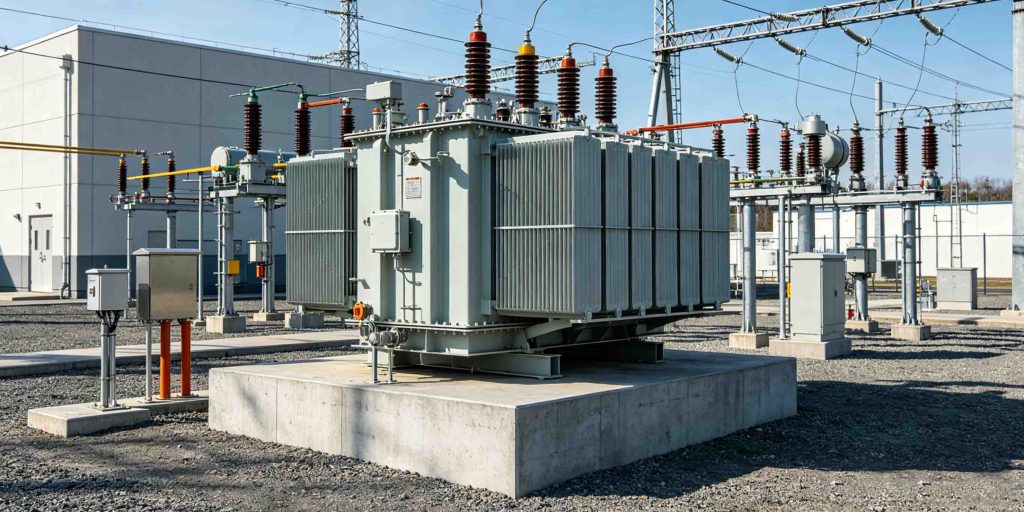
As renewable generation continues to expand, reverse transformer operation has become increasingly common.
Electricity generated at medium voltage is stepped up for transmission to the utility grid.
Wind turbine output is collected at medium voltage and stepped up through grid transformers.
Energy can flow in both directions during charging and discharging cycles.
Distributed energy resources frequently require bidirectional power flow between local generation and the utility grid.
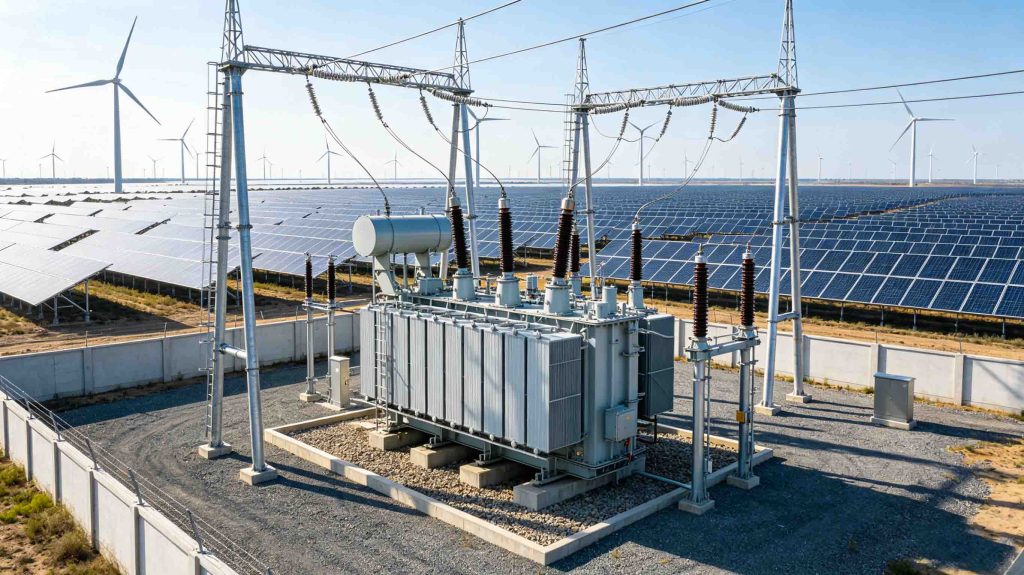
Not every project has identical requirements. When selecting a transformer for bidirectional operation, engineers should evaluate:
Working with an experienced transformer manufacturer ensures the transformer is optimized for both conventional and reverse power flow applications.