
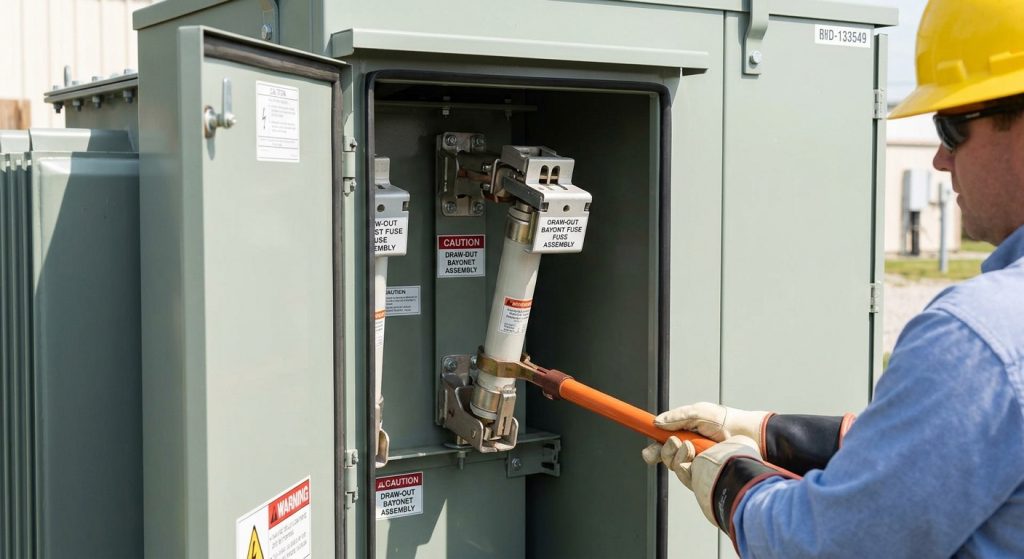
Pad mounted transformers are widely used in underground distribution networks, commercial facilities, industrial plants, renewable energy projects, and utility power systems. Since these transformers operate continuously under varying electrical loads, reliable protection against overloads and internal faults is essential.
One of the commonly used protection devices in oil-filled pad mounted transformers is the Bayonet Fuse, also known as a transformer fuse or draw-out fuse assembly. Installed inside the transformer tank and connected with the transformer primary circuit, the bayonet fuse provides overcurrent protection while helping prevent serious damage caused by abnormal operating conditions.
Understanding how bayonet fuses work and their relationship with pad mounted transformers can help engineers, EPC contractors, and utility buyers select suitable transformer protection solutions.
The bayonet fuse gets its name from its twist-and-lock, bayonet-style mounting method — similar to how a rifle bayonet attaches, and also comparable to a common bayonet-base light bulb socket. Inside a pad mounted transformer, the fuse assembly is installed on a fuse holder mounted within the high-voltage oil compartment. Field personnel can access it through the high-voltage compartment door on the cabinet and insert or remove it using an insulated switch stick, without needing to lift the core or return the unit to a factory for service.
Because pad mounted transformers are often installed in public, high-traffic areas — neighborhoods, commercial streets, or near schools — their high-voltage and low-voltage compartments are strictly separated by design. The bayonet fuse is installed within the high-voltage compartment, making it a key component for both protecting public safety around the enclosure and ensuring reliable equipment operation.
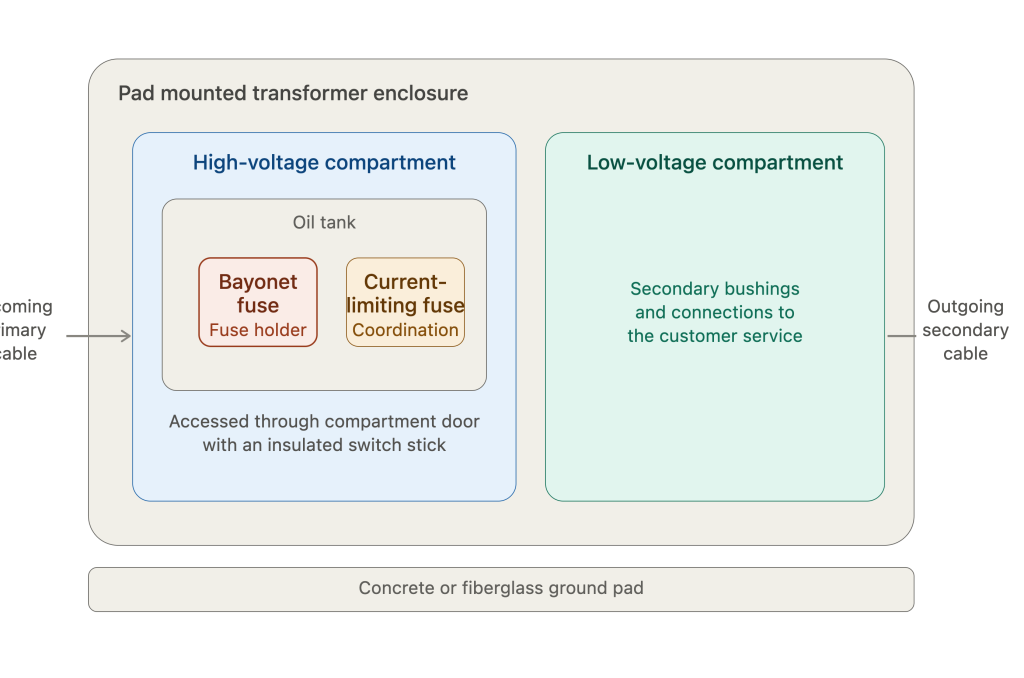
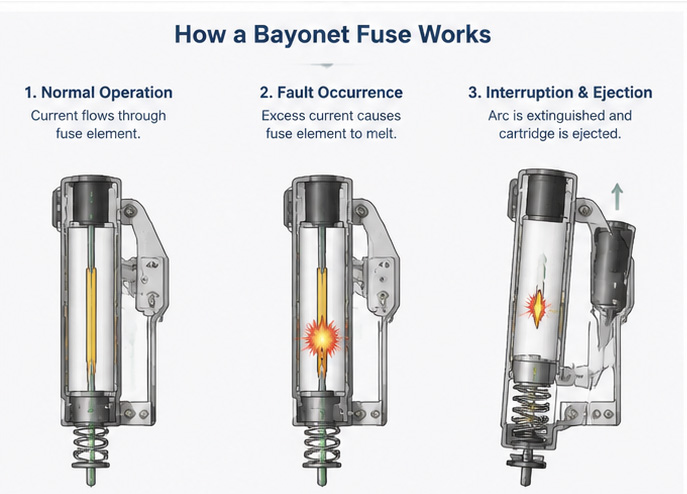
The operating logic of a bayonet fuse in a pad mounted transformer follows the same three-stage sequence — “sense current, interrupt, indicate”:
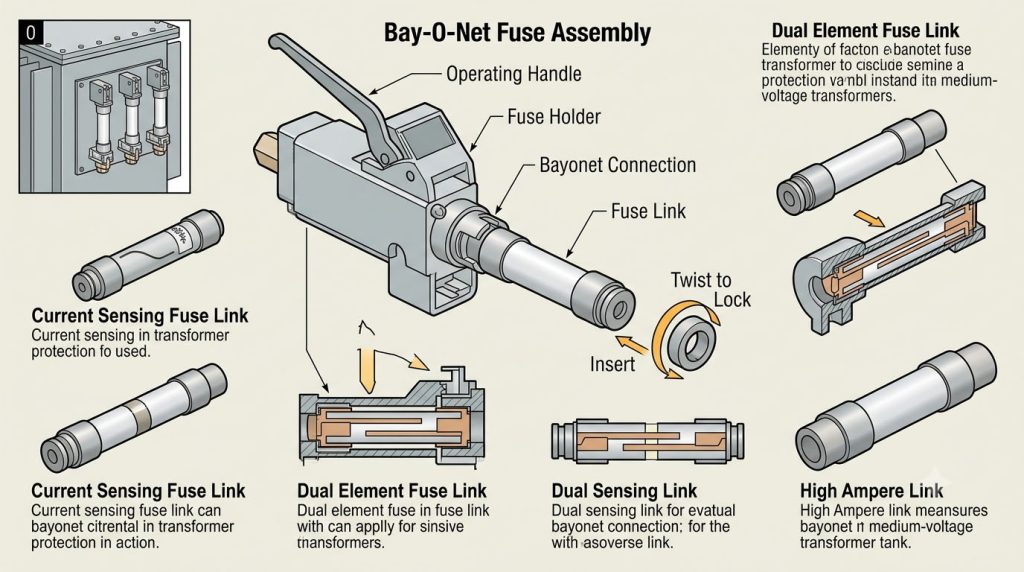
Although “Bayonet Fuse” is often used as a general term in transformer applications, different transformer manufacturers may use different fuse designs depending on voltage ratings, transformer capacity, and protection requirements.
Feature | Bayonet Fuse | Traditional External Fuse |
Installation | Inside transformer tank | Outside transformer enclosure |
Cooling | Oil-cooled environment | Air-cooled |
Application | Oil-filled pad mounted transformers | Various distribution equipment |
Maintenance | Replaceable fuse assembly | External replacement |
Protection | Overload and fault protection | General overcurrent protection |
For utility-grade pad mounted transformers, internal fuse designs provide a more compact and reliable protection solution.
Using an appropriate transformer fuse system provides several advantages:
By quickly disconnecting abnormal currents, bayonet fuses help prevent major transformer failures.
Replaceable fuse assemblies allow easier maintenance compared with replacing damaged transformer components.
Fuse protection minimizes the risk of fire, equipment damage, and extended power interruptions.
Internal fuse installation allows pad mounted transformers to maintain a compact footprint suitable for urban and industrial applications.
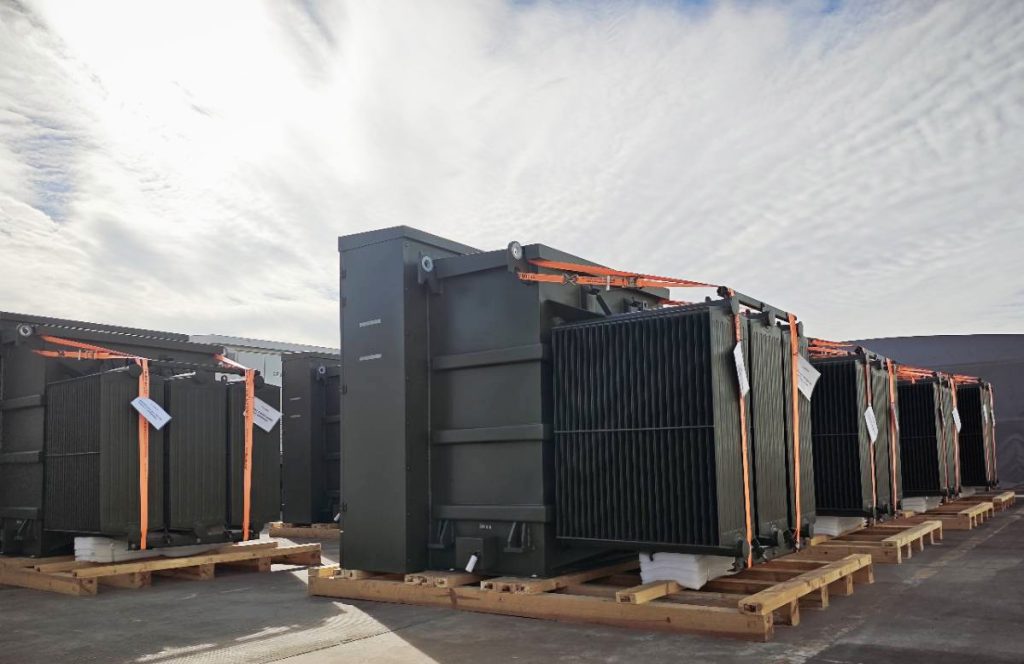
As a key protective device inside the high-voltage compartment of pad mounted (ground-mounted) distribution transformers, the bayonet fuse plays an irreplaceable role in safeguarding underground distribution networks and reducing public safety risk, thanks to its simple construction, reliable operation, and ease of field replacement. In practical engineering, it is recommended to select the appropriate bayonet fuse rating based on system fault level, cable network characteristics, and public safety requirements, coordinate it with current-limiting fuses and other protective devices, and establish a routine inspection and replacement program to ensure the long-term safe and reliable operation of pad mounted distribution transformers.
Pearl Electric specializes in the research, development, manufacturing, and global sales of distribution transformers, pad-mounted transformers, and dry-type and oil-immersed transformers. Its products comply with international standards such as IEC and are widely used in power grids, photovoltaics, wind power, data centers, and industrial sectors.
For floor-mounted transformer applications, Pearl Electric integrates suitable protection systems, including transformer fuse solutions, surge protection components, and customized medium-voltage configurations to meet diverse project needs. As a key protection component in the high-voltage compartment of pad-mounted transformers, plug-in fuses are an indispensable safety design element in Pearl Electric’s pad-mounted transformer product line. Their simple structure, reliable operation, and ease of field insertion and replacement allow for rapid current interruption in the event of a short circuit fault inside the transformer or on the cable side, preventing the fault from escalating and ensuring public safety. This aligns with Pearl Electric’s consistent emphasis on high reliability and ease of maintenance.
Pearl Electric can provide plug-in fuse protection solutions of appropriate specifications for pad-mounted distribution transformers based on the system short-circuit level, cable network characteristics, and safety regulations of the customer’s region, helping customers build safer and more stable underground power distribution networks.
1. What is the purpose of a bayonet fuse in a pad mounted transformer?
A bayonet fuse protects oil-immersed pad mounted transformers from electrical faults such as overloads and short circuits. When abnormal current exceeds the allowable limit, the fuse element melts and disconnects the transformer from the power supply, helping prevent damage to transformer windings, insulation systems, and other internal components.
2. Is a bayonet fuse the same as a transformer fuse?
A bayonet fuse is a type of transformer fuse specifically designed for oil-filled distribution transformers, especially pad mounted transformers. While “transformer fuse” is a general term for transformer protection devices, bayonet fuse refers to a specific fuse design that can be installed and replaced through a bayonet-style mounting mechanism inside the transformer tank.
3. Where is the bayonet fuse installed in a pad mounted transformer?
The bayonet fuse is typically installed on the medium-voltage primary side of an oil-immersed pad mounted transformer. It is mounted inside a fuse well within the transformer tank and operates in an oil-filled environment, which provides electrical insulation and heat dissipation.
4. How often should a bayonet fuse be replaced on a pad mounted transformer?
A bayonet fuse does not have a fixed replacement interval. It is normally replaced after it operates and interrupts a fault current. During routine transformer maintenance, technicians should inspect the fuse condition, contact connections, and protection coordination to ensure reliable operation.
5. Can a pad mounted transformer operate without a bayonet fuse?
A pad mounted transformer can technically operate without a bayonet fuse in some configurations, but proper overcurrent protection is essential for safe operation. Without suitable fuse protection, transformer failures caused by overloads or short circuits may result in severe equipment damage, longer downtime, and higher maintenance costs.